Benefits of Stretching: What the Science Supports, What It Doesn’t, and How to Start

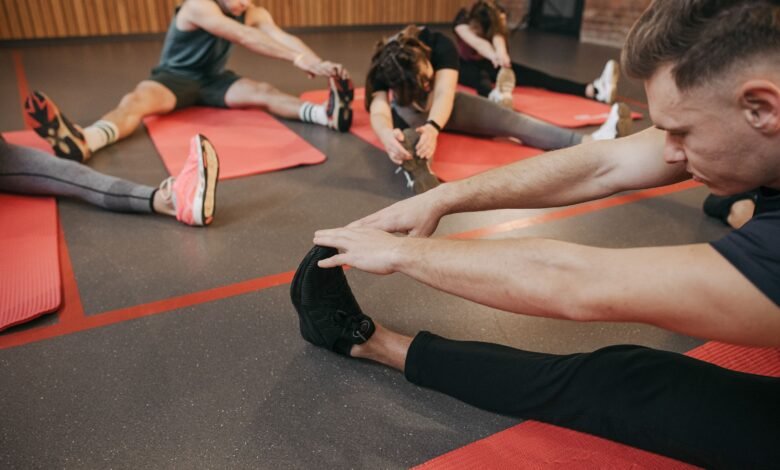
The benefits of stretching are real, but they are not always the ones you read about. Stretching reliably improves how far your joints can move. Benefits of Stretching It can ease stiffness, make some everyday movements easier and, in a few well-run trials, help people with long-term low back pain. It does not flush out toxins, make muscles “lean”, or protect you from every injury.
This guide sorts the claims by strength of evidence, explains why guidelines quote different hold times, and gives you a 10-minute routine with step-by-step instructions, a 4-week plan and clear safety limits. Benefits of Stretching Every key number comes from a named source listed at the end.
Key takeaways
- The best-supported benefit is a wider range of motion, largely because your body learns to tolerate the stretch.
- Moderate evidence supports dynamic warm-ups before exercise and guided stretching for chronic low back pain.
- Evidence is weak for stretching alone as a way to cut soreness or prevent injury.
- A sensible dose is at least 2 to 3 days a week, 10 to 30 seconds per hold (up to 60 seconds for older adults), 2 to 4 repetitions, about 60 seconds in total per muscle group.
- Aim for mild to moderate tension. Sharp pain means stop.
How stretching actually works
When you hold a stretch, you feel a pull and, after a while, a strong urge to back off. Benefits of Stretching That limit is set partly by your nervous system, not only by the length of the muscle. In a widely cited review, Weppler and Magnusson (2010) concluded that much of the short-term gain in flexibility seems to come from a change in stretch tolerance: your nervous system lets you go further before it signals discomfort.
With several weeks of practice, some changes in the tissue itself may also occur, but this tolerance effect explains two practical points. First, flexibility fades when you stop. Benefits of Stretching Second, consistency matters more than intensity, because you are training your tolerance, not forcing a muscle to become longer.
The benefits of stretching: an evidence scorecard
| Benefit | Evidence strength | Best method |
| Wider range of motion | Strong | Static or PNF stretching, 2 to 3+ days a week |
| Readiness for exercise | Moderate | Dynamic warm-up, 5 to 10 minutes |
| Function in chronic low back pain | Moderate | Guided programme, weekly class plus home practice |
| Posture support | Limited to moderate | Stretch tight areas, strengthen weak ones |
| Muscle tension and relaxation | Limited | Slow stretches with easy breathing |
| Blood vessel function | Early (small studies) | Regular static stretching |
| Better sleep | Limited | Gentle evening routine |
| Less soreness after workouts | Weak | Not a reliable tool |
| Injury prevention on its own | Weak | Combine with strength and balance work |
8 benefits of stretching, explained
1. Wider joint range of motion
Regular stretching is the most dependable way to increase how far a joint moves. Benefits of Stretching The American College of Sports Medicine (ACSM) recommends flexibility work at least 2 to 3 days a week and notes that daily stretching gives the greatest gains. In trials, measurable improvements typically show up after about 4 to 8 weeks of consistent practice. Because much of the gain is tolerance, it needs maintenance.
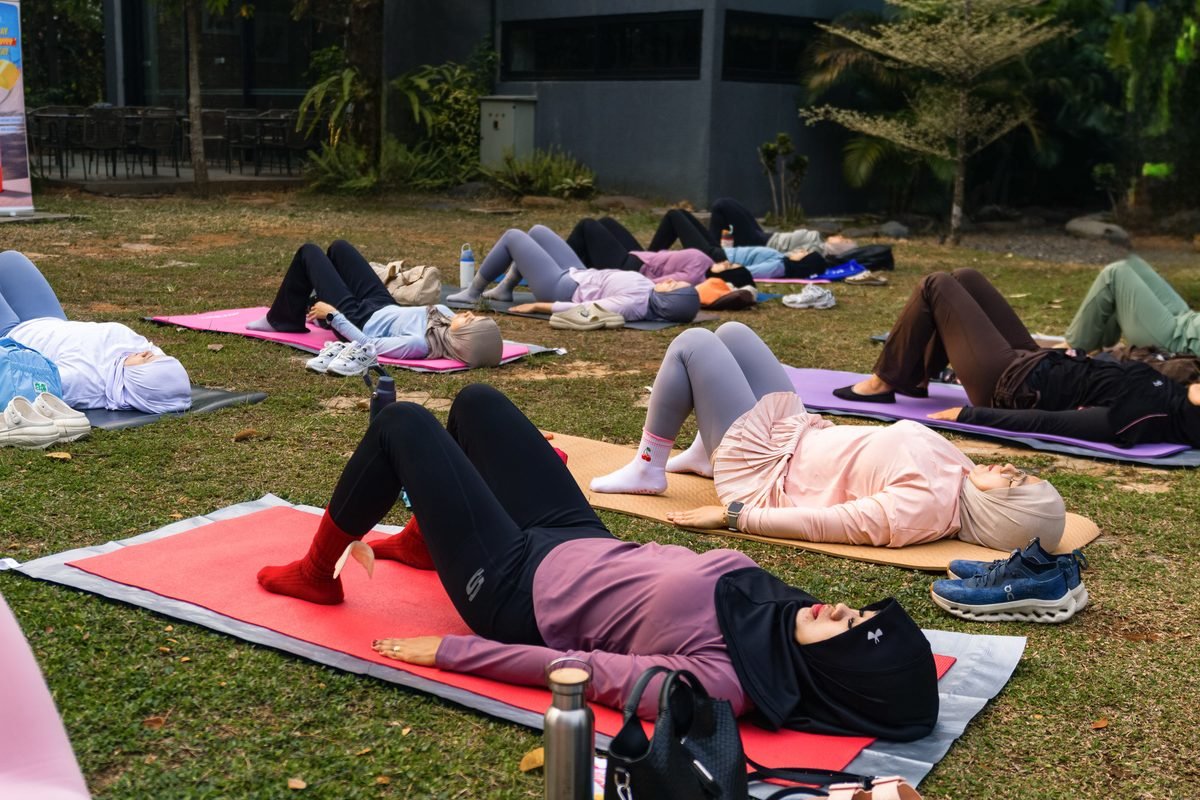
2. Easier movement where daily life demands it
Range of motion matters most at a few joints. Stiff ankles limit how deep you can squat or crouch, tight hip flexors can restrict your stride, and tight shoulders make reaching overhead or behind your back awkward. Stretching those joints with a few focused moves gives more practical payoff than stretching everything. Benefits of Stretching The self-tests later in this guide show you where to start.
3. Better function with chronic low back pain
In a 2011 randomised trial of 228 adults with chronic low back pain (Sherman and colleagues), a 12-week stretching class improved back-related function about as much as a yoga class, and both did better than a self-care book. Benefits of Stretching Participants also practised at home. Stretching is not a cure, and back pain with warning signs such as numbness or weakness needs assessment, but a guided programme is a low-risk option to discuss with a clinician.
4. A warm-up that prepares you
Dynamic stretching means moving smoothly through a joint’s range without holding the end position, such as leg swings or walking lunges. A 2016 systematic review by Behm and colleagues found that movement-based warm-ups tend to maintain or slightly improve performance, while long static holds immediately before power efforts, such as sprints and jumps, can temporarily reduce force. Use dynamic moves before activity and keep long holds for later.
5. Posture support, when paired with strengthening
Hours of sitting can leave the chest and hip flexors feeling tight while the upper back and glutes are under-used. Stretching the tight side and strengthening the weak side is the logic behind most posture programmes. Evidence for stretching alone is modest, so treat it as half of the plan, not the whole plan.
6. Relief from muscle tension
Slow, comfortable stretching with relaxed breathing can reduce the feeling of tightness and help the body wind down. Benefits of Stretching Evidence that stretching itself lowers stress or anxiety is limited; mind-body practices such as yoga and tai chi have more research. Use stretching as a convenient relaxation tool, not as treatment. If stress or low mood is persistent, speak to a clinician.
7. Early signs of healthier blood vessels
Small trials in middle-aged and older adults suggest that regular static stretching of the leg muscles may reduce arterial stiffness. These studies are small and short, so this is a promising area, not a proven benefit. Benefits of Stretching Walking and other aerobic exercise remain the proven way to protect your heart and circulation.
8. A gentle way to wind down before bed
There is no strong evidence that stretching improves sleep in healthy adults. Even so, five easy minutes before bed is low risk and works as a calming cue for many people. If you have persistent trouble sleeping, see a clinician.
What stretching does not do
It does not reliably reduce soreness. Benefits of Stretching A Cochrane review (Herbert and colleagues, 2011) found that stretching before or after exercise lowered muscle soreness by only about 1 point on a 100-point scale, too small to notice.
It does not prevent injury by itself. In a 2014 meta-analysis, Lauersen and colleagues found that stretching alone did not significantly reduce sports injuries, while strength training cut them by roughly two-thirds. Benefits of Stretching Multi-part warm-ups that combine strength, balance and dynamic movement are the better bet.
It does not remove toxins or waste. No good evidence supports this claim.
It does not build strength. Stretching lengthens muscle tissue’s working range; it does not strengthen it. Pair it with resistance training.
It cannot override your anatomy. Joint shape and genetics set a ceiling on flexibility. Aim to improve from your own baseline, not to match a gymnast.
Which type of stretching should you use?
| Type | What it is | Best used | Watch out for |
| Dynamic | Smooth, controlled movement through the range, no hold | Before activity, 5 to 10 minutes | Keep the pace moderate, not jerky |
| Static | Holding a stretch at mild tension | After activity or as a separate session | Long holds right before power efforts can temporarily reduce force |
| PNF | Stretch, contract the muscle for about 5 seconds, relax, then ease deeper | Separate session, often with a strap or partner | Intense; learn it with guidance first |
| Ballistic | Bouncing at the end of the range | Mostly trained athletes | Higher strain risk; skip it as a beginner |
How long, how often and how hard
You will see hold times of 10 to 30 seconds in some sources and 60 seconds in others. Benefits of Stretching The difference is mostly about who is being studied. ACSM recommends 10 to 30 seconds per hold for most adults and up to 60 seconds for older adults, with 2 to 4 repetitions, adding up to about 60 seconds per muscle group.
Simple rule: hold each stretch for 30 seconds, twice. If you are short of time, one 30-second hold per side still helps.
Frequency: at least 2 to 3 days a week; daily is most effective for flexibility.
Intensity: stop where you feel a mild to moderate pull, roughly 4 to 6 on a 0 to 10 scale. Benefits of Stretching This is a practical rule of thumb, not a research cut-off. Pain, tingling or numbness means ease off.
A 10-minute stretching routine (step by step)
Warm-up (3 minutes). March or walk briskly for 2 minutes, then do 10 leg swings per leg and 10 arm circles in each direction.
Stretches (about 7 minutes). Hold each for 30 seconds per side, once through. Add a second round when you have time.
- Calf stretch. Stand facing a wall, hands on it. Step one foot back, heel down, back knee straight, front knee bent. Benefits of Stretching Lean in until you feel a pull in the calf. Soften the back knee slightly to reach the lower calf.
- Lying hamstring stretch. Lie on your back, other knee bent with foot flat. Loop a towel or strap around one foot and straighten that leg toward the ceiling until you feel a mild pull behind the thigh. Keep your lower back resting on the floor.
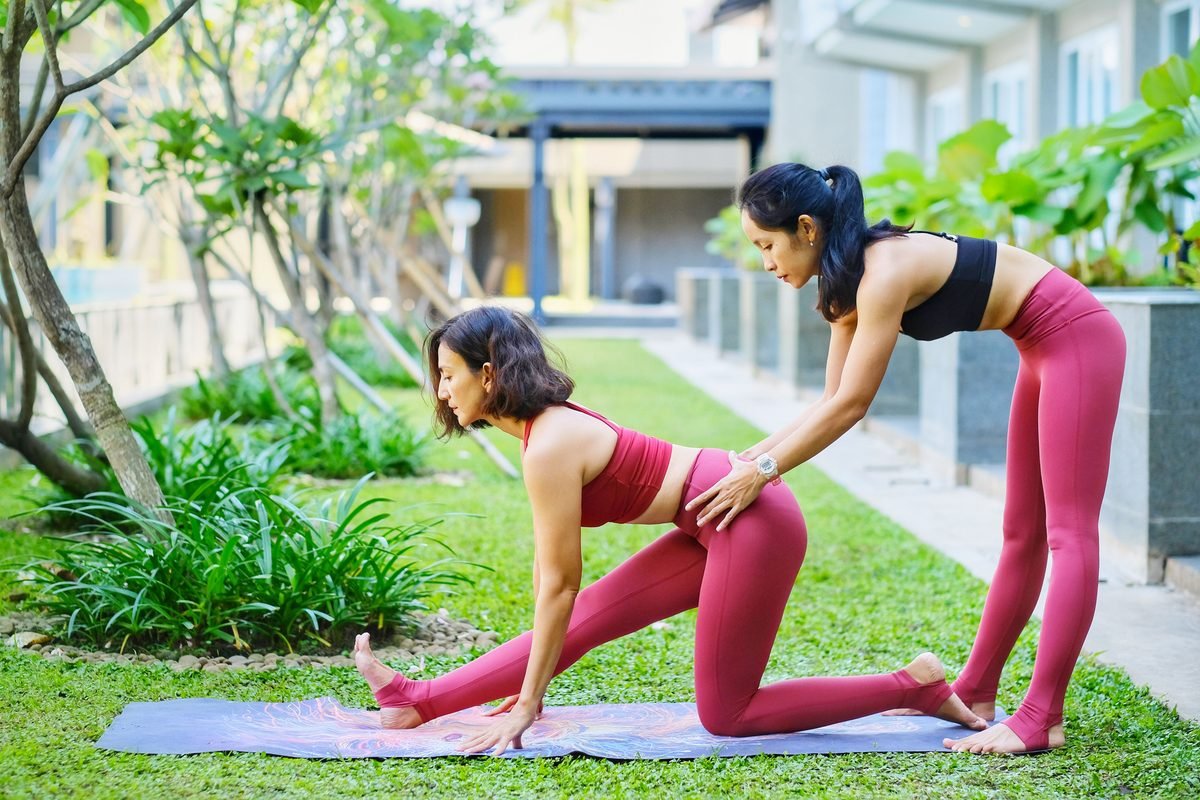
- Half-kneeling hip flexor stretch. Kneel on one knee on a cushion, other foot forward. Tuck your tailbone under, squeeze the glute of the kneeling leg and shift your hips slightly forward. Stay tall; you should feel the front of the hip.
- Standing quad stretch. Hold a wall for balance. Bend one knee and hold your ankle (or a strap), heel toward your glute, knees close together. Keep your back from arching.
- Figure-four glute stretch. Lie on your back, rest one ankle on the opposite knee, then draw the supporting thigh toward your chest with both hands.
- Doorway chest stretch. Place a forearm on a door frame, elbow at or slightly below shoulder height. Step through gently until you feel a pull across the chest. Back off if the front of the shoulder pinches.
- Side neck stretch. Sit tall, hold the seat with one hand, and tilt your ear toward the opposite shoulder. Let the weight of the head do the work; do not pull.
- Child’s pose. Kneel, sit your hips back toward your heels and reach your arms forward. Breathe into your back. Put a pillow under the knees or skip it if they hurt.
A 4-week starter plan
| Week | Days | What to do |
| 1 | 3 | One round of the routine. Learn the positions and keep the stretch mild. |
| 2 | 3 to 4 | Add a second 30-second round on your two tightest areas. |
| 3 | 4 | Add a 5-minute dynamic warm-up before your usual workouts. |
| 4 | 4 to 5 | Retest yourself (below) and spend extra time on any area that lags. |
Two self-tests to track progress
Knee-to-wall (ankles). Face a wall with one foot a short distance from it. Bend your knee to touch the wall without lifting the heel. Find the furthest distance you can manage, then compare both sides and retest in 4 weeks.
Reach-behind-back (shoulders). Reach one hand over your shoulder and the other up from below, and note how close the fingers get. Compare sides and retest later.
These are self-checks, not medical tests.
Who should adjust the routine?
- Older adults: ACSM suggests holds of up to 60 seconds. Use a sturdy chair for support. Flexibility is not the main fall-prevention tool: a 2019 Cochrane review (Sherrington and colleagues) found exercise programmes reduce falls by roughly a quarter, and balance and strength training matter most.
- Long desk days: a 2-minute break every hour or two for the chest, hip flexors and neck is easier to keep up than one long session.
- Pregnancy: hormones loosen joints, so do not push to your limit, and later in pregnancy avoid lying flat on your back for long. Check with your midwife or doctor.
- Joint hypermobility (for example Ehlers-Danlos): focus on strength and control rather than deeper stretching, ideally with a physiotherapist.
- Osteoporosis: avoid forceful forward bending and twisting of the spine; ask for guidance.
- Recent injury or surgery: follow your clinician’s advice, and do not stretch a freshly strained muscle.
- Reduced sensation (for example diabetic neuropathy): you may not feel overstretching, so keep stretches gentle and get guidance.
Safety rules and when to see a professional
- Warm up with 5 to 10 minutes of easy activity first.
- Move into the stretch smoothly and avoid bouncing.
- Breathe normally.
- Stop for sharp pain, tingling or numbness.
- See a clinician or physiotherapist if pain lasts, or after an injury with swelling, bruising or weakness.
Frequently asked questions
How often should I stretch?
At least 2 to 3 days a week; daily is the most effective for flexibility (ACSM).
What is the best time of day?
When your muscles are warm, such as after a walk or a workout. Morning or evening both work; the habit matters more than the clock.
Should I stretch before a workout?
Do a dynamic warm-up. Save long static holds for afterwards, especially before sprints, jumps or heavy lifts that need power.
Does stretching help sore muscles?
Very little, according to the Cochrane review. Light movement and rest usually feel better.
How long until I see results?
Many trials measure improvements after 4 to 8 weeks, although you may feel looser sooner.
Conclusion
The benefits of stretching are real but specific. Stretching is best at widening your range of motion, and the evidence is also reasonable for dynamic warm-ups and for guided stretching programmes in chronic low back pain. It is not a dependable way to prevent injury, reduce soreness or build strength, so pair it with strength and balance training and regular aerobic activity.
You do not need long sessions. Hold each stretch for about 30 seconds, aim for mild to moderate tension, and practise at least 2 to 3 days a week. Start with the 10-minute routine above, follow the 4-week plan, and retest yourself at the end of week 4. Adjust the routine if you are pregnant, hypermobile, older or recovering from an injury, and stop if you feel sharp pain, tingling or numbness.